SPIRITUAL
SPIRITUAL
Fractals, Constants, and the Space Within Everything Copy
Fractals, Constants, and the Space Within Everything Copy
Fractals, Constants, and the Space Within Everything Copy
Fractals, Constants, and the Space Within Everything Copy
Het Dave
Het Dave
Published in SPIRITUAL
Published in SPIRITUAL
Media credit by hetluv
Media credit by hetluv
A personal reflection on fractals, mathematics, and Advaita Vedanta—exploring how patterns, constants, and consciousness may all point toward the same underlying reality.
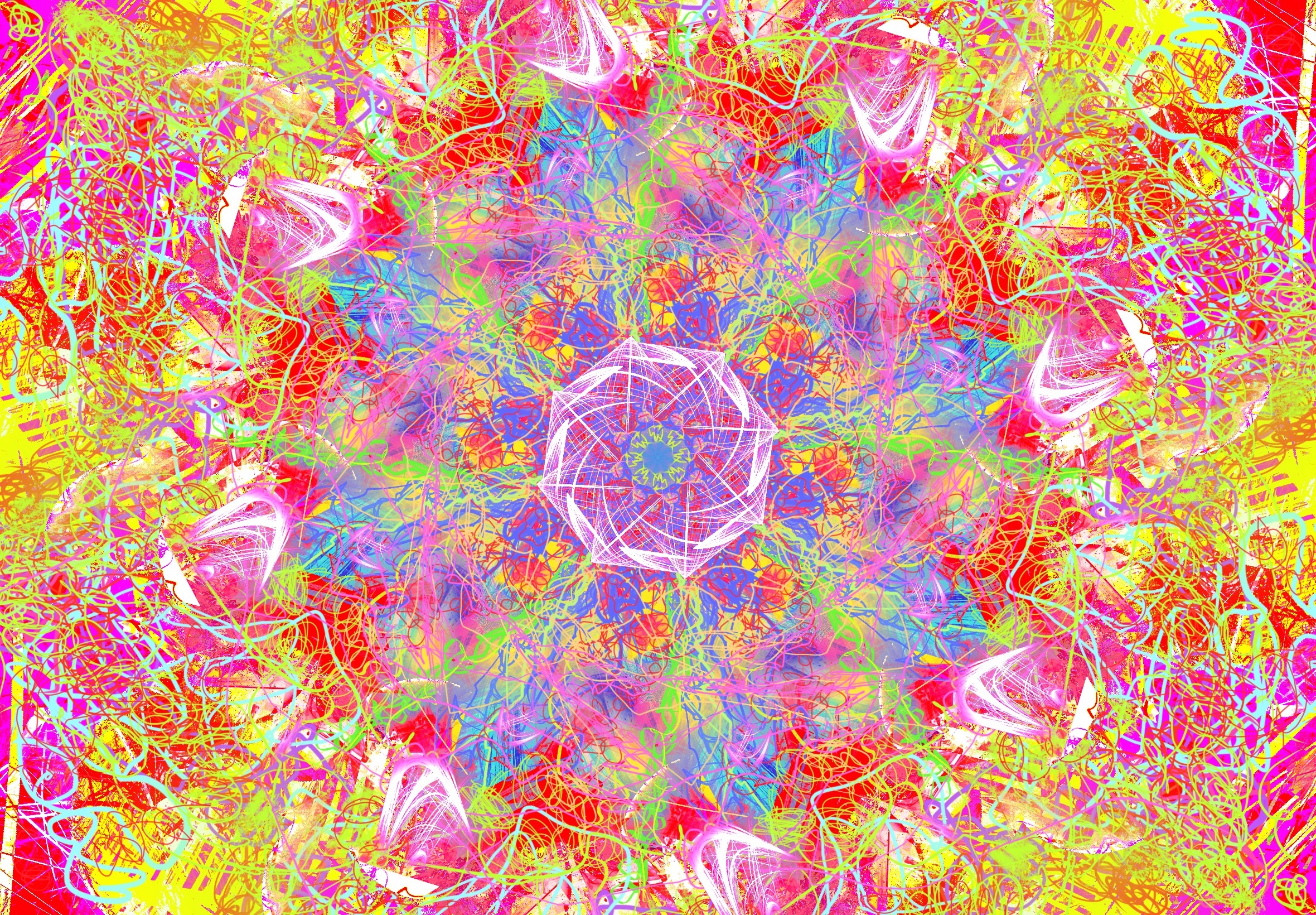
There’s something strange about patterns like fractals and mandalas. The more you look at them, the more they feel familiar-like they’re not just designs, but reminders. Each piece reflects the whole, repeating endlessly, almost as if the universe is quietly echoing itself.
That idea shows up in Advaita Vedanta too. Non-duality. No separation. Not between you and the world, not between matter and awareness. Just one continuous reality, appearing as many.
Sometimes it helps to look at it through math.
At 0 degrees:
sin(0) = 0
cos(0) = 1
It’s such a simple point, but it says a lot. Zero isn’t just nothing-it’s a kind of starting place. Still, complete, and somehow full at the same time. That feels close to what Advaita points to: a state where nothing is missing because nothing is separate.
Then there are constants like π, e, and i.
They show up everywhere-in circles, growth, waves, even in things we can’t directly see. They’re fixed, but they describe motion, change, and even the imaginary.
I started thinking about them less like numbers and more like symbols.
π feels like the measurable world-the endless, repeating, irrational structure of reality. Maybe even Maya, the illusion we experience.
e is different. It shows up in growth, in natural processes, in things unfolding on their own.
And i… that one’s strange. It exists, but not in a way we can visualize directly. It’s required, though. Without it, a lot of reality just doesn’t work mathematically.
Somewhere in that, I couldn’t help but see a parallel:
Brahma creates.
Vishnu sustains.
Shiva dissolves—and goes beyond.
Not as separate gods, but as ways of describing what’s already happening.
And Shiva… feels different. Not just destruction, but space. The background where everything appears and disappears. If π is the structure, Shiva is what contains it—what isn’t limited by it.
In that sense, religion starts to look less like belief and more like a kind of formula. Not rigid, but directional. Something you work through, not something you just accept.
Maybe liberation—moksha—is like solving something that was never really a problem. Like trying to evaluate 0/0, only to realize the question itself dissolves.
“Om Namah Shivaya” then isn’t asking for anything. It’s more like remembering. Or aligning.
Fractals hint at the same thing visually. No matter how far you zoom in or out, the pattern holds. The observer and the observed stop being clearly different.
And at some point, it becomes less about understanding and more about noticing:
What if nothing is actually separate?
What if everything-including you-is just that same pattern, appearing in a different form?
Not as an idea, but as something quietly obvious.
References:
There’s something strange about patterns like fractals and mandalas. The more you look at them, the more they feel familiar-like they’re not just designs, but reminders. Each piece reflects the whole, repeating endlessly, almost as if the universe is quietly echoing itself.
That idea shows up in Advaita Vedanta too. Non-duality. No separation. Not between you and the world, not between matter and awareness. Just one continuous reality, appearing as many.
Sometimes it helps to look at it through math.
At 0 degrees:
sin(0) = 0
cos(0) = 1
It’s such a simple point, but it says a lot. Zero isn’t just nothing-it’s a kind of starting place. Still, complete, and somehow full at the same time. That feels close to what Advaita points to: a state where nothing is missing because nothing is separate.
Then there are constants like π, e, and i.
They show up everywhere-in circles, growth, waves, even in things we can’t directly see. They’re fixed, but they describe motion, change, and even the imaginary.
I started thinking about them less like numbers and more like symbols.
π feels like the measurable world-the endless, repeating, irrational structure of reality. Maybe even Maya, the illusion we experience.
e is different. It shows up in growth, in natural processes, in things unfolding on their own.
And i… that one’s strange. It exists, but not in a way we can visualize directly. It’s required, though. Without it, a lot of reality just doesn’t work mathematically.
Somewhere in that, I couldn’t help but see a parallel:
Brahma creates.
Vishnu sustains.
Shiva dissolves—and goes beyond.
Not as separate gods, but as ways of describing what’s already happening.
And Shiva… feels different. Not just destruction, but space. The background where everything appears and disappears. If π is the structure, Shiva is what contains it—what isn’t limited by it.
In that sense, religion starts to look less like belief and more like a kind of formula. Not rigid, but directional. Something you work through, not something you just accept.
Maybe liberation—moksha—is like solving something that was never really a problem. Like trying to evaluate 0/0, only to realize the question itself dissolves.
“Om Namah Shivaya” then isn’t asking for anything. It’s more like remembering. Or aligning.
Fractals hint at the same thing visually. No matter how far you zoom in or out, the pattern holds. The observer and the observed stop being clearly different.
And at some point, it becomes less about understanding and more about noticing:
What if nothing is actually separate?
What if everything-including you-is just that same pattern, appearing in a different form?
Not as an idea, but as something quietly obvious.
References: